

Industry: Education
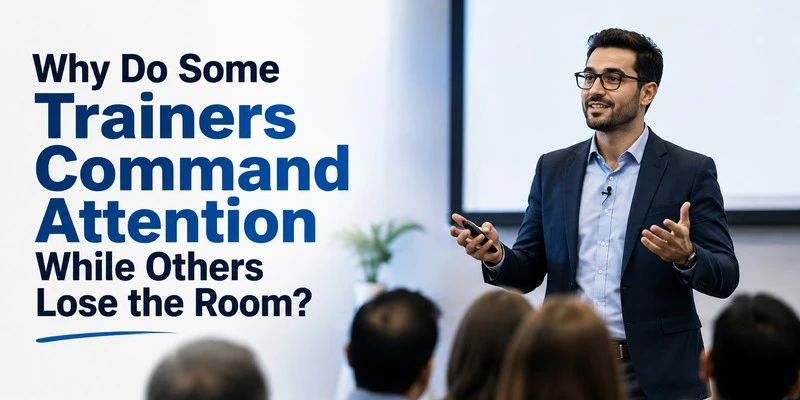
Command of a room is a skill, not a personality trait, which is good news for anyone who's ever frozen mid-session. Trainers who hold attention prepare deliberately: clear structure, early participant involvement, body language that signals confidence even when they don't feel it. Trainers who lose the room tend to default to flat delivery and dense slides instead. A train-the-trainer course teaches people how to do the former on purpose.
Attention drops the moment a session stops requiring anything from the audience. A flat voice, slides read straight off the screen, no questions asked- these all signal that nothing here needs active thought. Pacing makes things worse. Trainers often spend too long on the easy stuff early on, then rush through the material that actually matters, so people end up lost right when it counts. Ignore the fidgeting, the blank stares, the side conversations, and disengagement just picks up speed from there.
What separates an average trainer from an exceptional one is strong corporate trainer skills built on presence, structure, and interaction, not just subject knowledge. Presence is felt in the room with trainers who have open posture, steady eye contact, and purposeful movement. They have clear aims for the session from the beginning, and move between topics with clear signposts so people know where they are all the time. Most importantly, they ask straight questions early on, turning passive listeners into active contributors within the first few minutes.
A train-the-trainer program improves audience engagement by systematically building these skills via a structured trainer development program instead of trial and error. Participants practice reading the room and adjusting pace in real time, designing interactive segments instead of lecture-heavy blocks, and handling group energy dips before they become full disengagement. This kind of guided practice, with feedback from experienced facilitators, shortens the learning curve dramatically compared to learning purely on the job.
The reason storytelling makes corporate training more effective comes down to memory. A relevant anecdote gives an abstract concept something to attach to, making it easier to recall than data alone, while also creating an emotional entry point that a bullet point simply can't. Trainers who weave short, purposeful stories into their sessions hold attention longer and see better retention weeks out, because people remember the story long after they've forgotten the slide.
Becoming a certified trainer is a realistic next step once you're comfortable speaking to groups, genuinely interested in helping others learn, and willing to adapt your style based on feedback. These signs matter more than natural charisma, because commanding a room is a learnable skill built through structured practice, which is exactly what a train-the-trainer certification program delivers.
Ready to become the trainer people remember? Contact Persona to join their certified train-the-trainer program today and start building sessions that command attention from the first minute.

Keep updated with our
 Subscribe