

Industry: Others
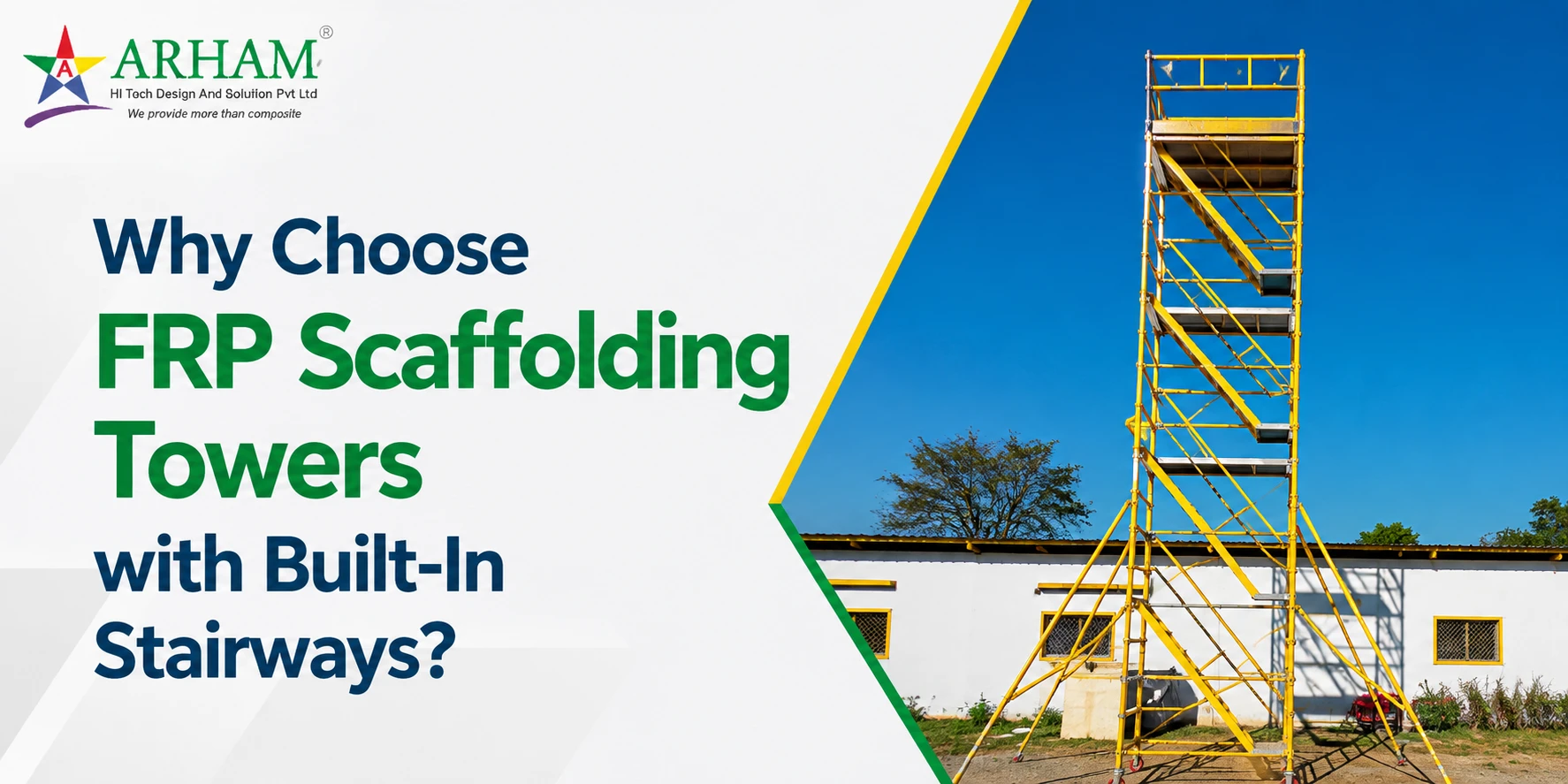
The FRP double platform scaffolding tower with built-in stairways is a strong non-conductive structure for workers and reduces the time for climbing between levels. This safety, coupled with speed, makes FRP GRP scaffolding ladder in India a workable upgrade over normal ladder-based scaffolding for industrial and electrical locations.
Electricity and metal don't go well on a job site, and steel scaffolding puts that risk directly under workers' feet. Any accidental contact with live wiring turns the whole structure into a conductor. An FRP scaffolding tower removes that danger entirely, since the material doesn't carry current, and its resistance to rust and corrosion near moisture or chemicals gives electrical and utility teams another reason to choose it over metal alternatives.
Any industry that deals with live electrical equipment or works in corrosive environments should look at this material. That includes power plants, chemical processing facilities, oil refineries and telecom infrastructure, and construction and maintenance crews working in coastal or humid areas where steel scaffolding wears out quickly and needs frequent replacement.
Time gets lost every time a worker has to climb down for tools, materials, or a different working height on a single-platform setup. A second level does that by allowing workers to organise equipment and move between tasks without stepping off the tower. It’s a small change that adds up on jobs with tight timelines.
Steel scaffolding wears away with rain, humidity and chemical fumes over the years. It rusts, joints weaken, and it needs regular maintenance just to keep it safe. FRP resists all of that by nature, holding its strength and shape regardless of weather or airborne chemical exposure. Over the life of the equipment, that translates into fewer replacements and far less time spent on maintenance.
The difference between a tower that is safe to work on and one that is not is non-slip treads, strong handrails, and a clear load rating.
Replacing the awkward climb of a ladder with a stable, walkable path between platforms changes the entire experience of using a scaffolding tower. For teams working near electrical systems or in harsh outdoor conditions, an integrated stairway is not just about convenience; it directly reduces risk on site. For teams sourcing GRP industrial access ladders in India, this design reduces safety compromises and holds up well under repeated, demanding use.
Got a site that needs this kind of access solution? Call Arham Composite, and they'll walk you through load ratings, sizing, and which customisations actually make sense for your setup.

Keep updated with our
 Subscribe