
Industry: Hospitality
The respective providers of healthcare tend to function in a daily manner that too, with varied risks starting from operational to clinical, and risks associated with safety prospects. These risks are particularly problematic if they are being actively documented in spreadsheets via email, or in isolated records, since one can struggle to find the issues early enough and simultaneously have any early knowledge of whether any corrective actions are taken.
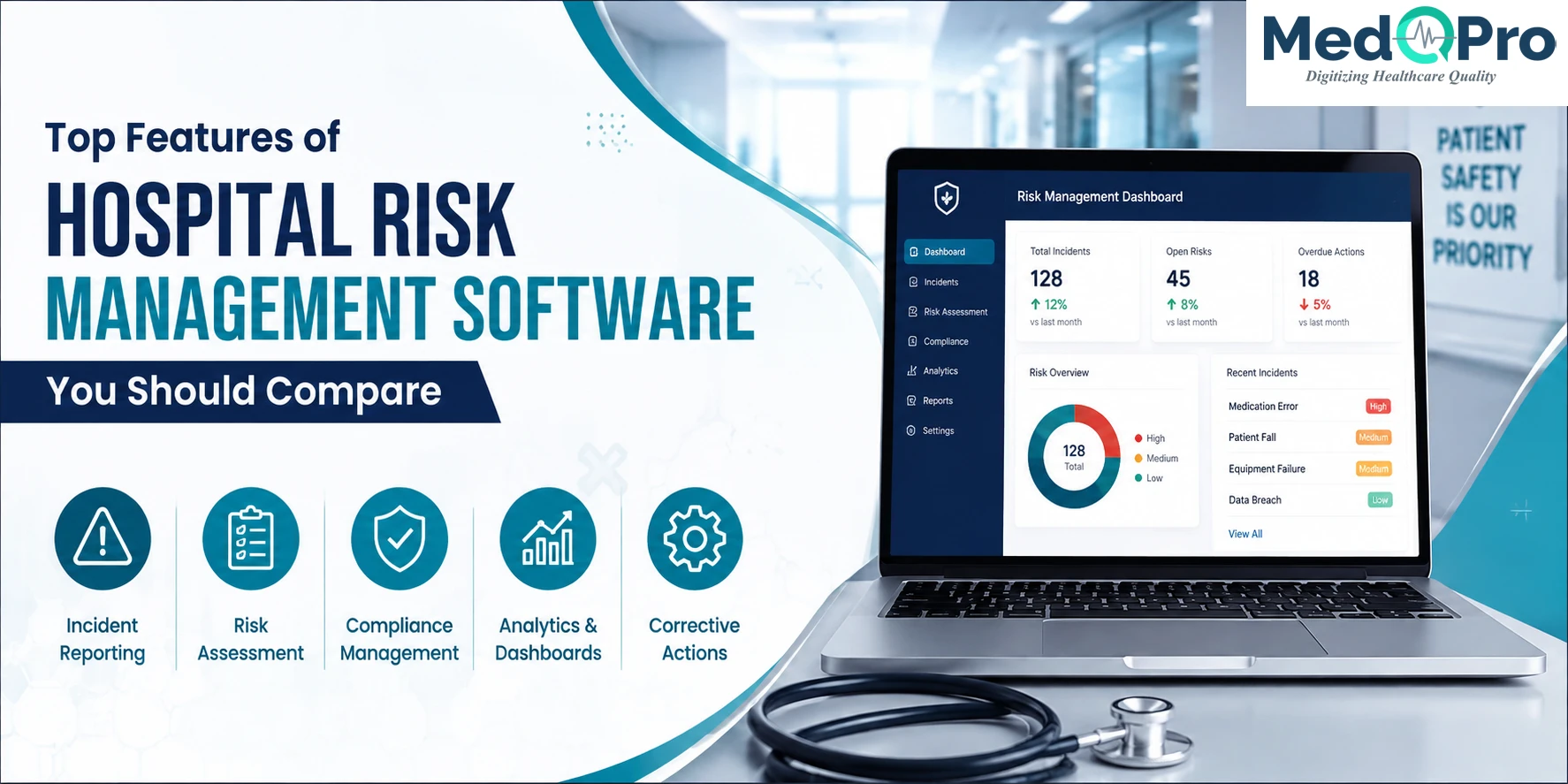
The use of hospital risk management software service features are important and simultaneously allows for a managed level of solution to track risks and have a transparent idea of the risk-related issue within the hospital organisation.
Further, the system should effectively capture incidents over just simply bringing the accurate platform, and assist the quality and safety teams to recognise potential risks and spontaneously measure the core impact of the risk if it actually occurs, and thus support prevention while keeping a track of record of the project to improve continuously.
The key search is for the capabilities that enable teams to recognise the risk and even assess their effects and impacts, assign multiple mitigation measures, and effectively keep a progress track while documenting when they are being closed.
However, centralised risk registers may improve the effectiveness of risk management by providing all users with an overall picture of risks identified across the different departments. Other spontaneous prospects such as incident management, along with core tracking of actions and even risk assessments and reporting, can all be useful in quality teams to keep processes consistent and avoid relying on fragmented documentation.
Alerts, along with audit trails and even role-based levels of access, are crucial in situations where more than one department and users are accountable for handling risks related to healthcare systems. It is the audit trail that drives visibility of changes and simultaneously updates and completes actions while ensuring a certain level of accountability and assists in keeping up traceability within the organisation.
Automated alerts can inform the users responsible for the assessment of any upcoming assessment, future action, or key risk-related activity. Meanwhile, role-based access ensures that employees can only access, view, or manage data as per their roles, which will help provide controlled access to sensitive blood quality and safety information.
Should hospital risk software integrate with HIS, EHR, and quality management systems?
Through a subsequent action of removing the key requirement for manual movement of information between varied systemologies, integration can make determining risk factors much easier. Be that as it may, an integrated level of healthcare quality management system can actively link all the relevant workflows together and enable the respective teams to have a more holistic approach to the functioning of the system.
Hospitals will need to review the compatibility between the software and the HIS, EHR, incident reporting, audit, and quality system before investing in software. The aim is to make the information more fluid and not to develop another stand-alone application.
Not all risks that are identified have the same level of urgency. Risk scores assist teams in determining what a threat is and how severe it might be, ensuring it is simpler to identify urgent concerns from lower-priority ones.
These assessments need to be easily made and be easily reviewed by a useful system. Using visual dashboards and reports, the Quality leaders can then draw conclusions about what needs to be done now and see if the mitigation being used is working.
Hospitals should investigate whether or not the platform will be easy to use, mobile-friendly, adjustable to their workflows, have relevant analytics, and maintain appropriate records before making an investment. Look into scalability, implementation help, user access, and integration options are also important.
Furthermore, thinking about how this software will fit into overall accreditation and quality goals is important in addressing the risk management issues as a standalone factor.
MedQPro integrates all the elements of risk management, incident reporting, audits, documentation, quality indicators, and any other elements related to accreditation processes within a single platform through risk management software for hospitals. It has an extensive suite of modules covering all healthcare organisations that can transform entire teams into a more structured quality management model that takes fragmented risk processes out of the equation.
Looking for an easy way to manage a hospital's risk? Contact MedQPro, a better healthcare solution for managing your quality of care, safety, and accreditation processes.

Keep updated with our
 Subscribe